
Pre‑production samples utilise carefully selected paper‑board batches with fixed grammage, fibre composition and surface‑treatment. During continuous high‑volume manufacturing, some packaging producers switch paper‑mill sources for cost‑related reasons without updating sample references. Even if nominal board grammage stays identical, fibre structure, internal Cobb‑value and inherent oil‑resistance can shift substantially. Static visual inspection cannot detect these material‑baseline changes; boxes may look identical yet exhibit vastly different anti‑grease and anti‑moisture behaviour when holding hot, juicy hamburgers. Qcecopack locks approved paper‑mill source specifications within each OEM project file. Every incoming paper‑board delivery undergoes physical‑property spot‑verification, blocking unapproved paper‑stock substitution from altering bulk‑lot hamburger‑box field‑performance.
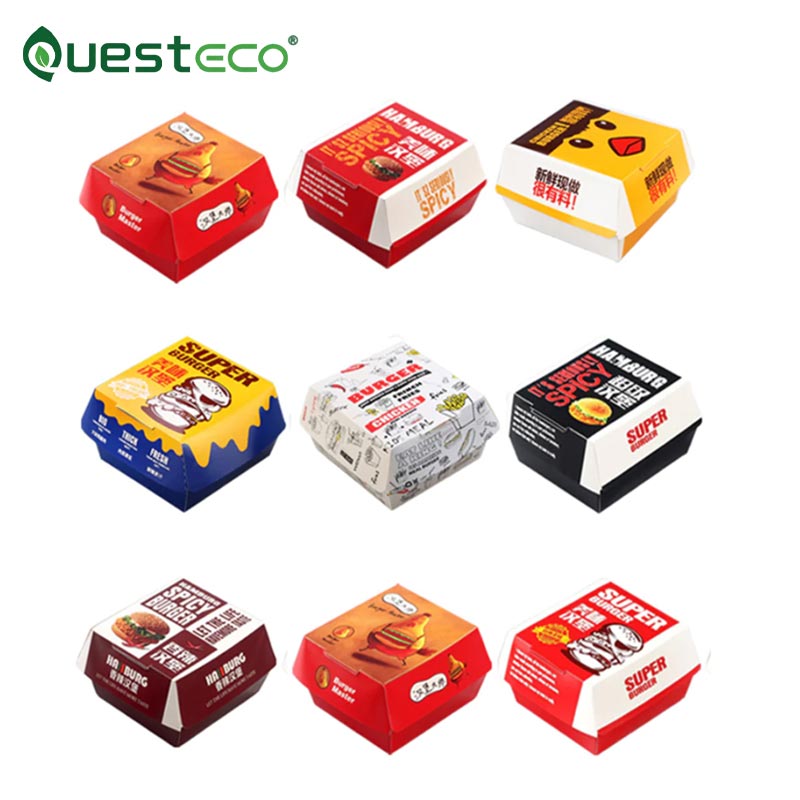
Sample‑stage coating application uses calibrated production parameters. Over extended coating‑machine runs, raw‑coating‑liquid concentration, coating‑weight per unit‑area and drying‑oven temperature can creep out of set tolerances. Even small coating‑weight reduction on crease and fold‑regions weakens local grease‑resistance. While flat box‑panel sample‑test results remain acceptable, folded crease lines become vulnerable points for hot hamburger grease to penetrate. Ordinary visual QC cannot spot micro‑variations in coating‑thickness across crease zones. Qcecopack implements multi‑point coating‑weight monitoring covering flat panels and critical fold‑crease areas. Hot‑grease soak‑through testing targets fold‑line locations, catching coating‑drift‑related weak‑points before mass‑production box‑finishing.
Prototype‑sample cutting uses brand‑sharp die‑cutting blades. After millions‑of‑box production cycles, cutting‑and‑creasing dies gradually wear. Blunt creasing‑blades generate micro‑fractures along fold‑lines instead of clean controlled indentations. These hairline micro‑cracks stay closed while boxes lie flat in carton storage. When foodservice staff fold‑assemble boxes on‑site, crease‑line micro‑cracks open up, offering grease and sauce fast penetration channels. Standard sample‑inspection using brand‑new dies will never reproduce this wear‑related defect mode. Qcecopack sets output‑count‑driven die‑blade‑refurbishment triggers. Periodic finished‑box crease‑line microscopic‑sampling validates fold‑integrity across full production campaigns, lowering in‑field crease‑crack‑driven leakage complaints for hamburger take‑away deployments.
Sample boxes are preserved inside climate‑stable dry‑lab storage. Cross‑border sea‑freight exposes stacked paper‑box pallets to high container‑ambient‑humidity. Paper‑board absorbs ambient moisture, reducing stiffness and fold‑line tear‑resistance. Boxes that hold shape perfectly in dry‑sample‑condition turn soft and prone to splitting once importers open shipping‑containers. This degradation is purely transit‑environment‑triggered and independent of original sample‑quality. Qcecopack runs accelerated container‑humidity‑chamber simulation for finished packed‑box pallets. Post‑humidity‑exposure folding‑strength measurement validates real‑world sea‑freight robustness, anticipating post‑arrival box‑softening risks for foodservice distributors operating in high‑humidity import destinations.
Branded takeaway hamburger paper boxes use printing‑inks close to food‑contact zones. Qualification‑samples utilise compliant ink batches tested for food‑contact migration limits. If subsequent print‑ink lots get swapped without re‑validation, heavy‑metal or substance‑migration risks emerge, even if graphic colour‑output visually matches samples. Many buyers only cross‑check visual logo appearance and overlook ink‑batch traceability requirements. Qcecopack enforces full‑ink‑batch traceability for every printing run. Each new ink‑batch receives migration‑relevant spot‑check, ensuring printed hamburger‑box lots keep satisfying global food‑contact regulatory constraints such as EU 1935/2004 and FDA requirements.
International foodservice‑chain incoming‑QA and retail‑supply audits demand aggregated supporting‑records: paper‑board incoming‑test‑logs, coating‑performance‑reports, print‑ink food‑contact‑verification data. Stand‑alone prototype‑sample certificates carry zero validity for serial‑production bulk‑shipments. Without lot‑specific English‑language traceability‑archives, takeaway hamburger‑paper‑box deliveries risk incoming‑batch‑rejection and delay foodservice‑brand roll‑out timelines. Qcecopack compiles unified project‑linked documentation‑packages integrating above‑mentioned test‑results. Audit‑ready traceable archives remove documentation‑gap‑caused supply‑chain‑stall‑risks for global private‑label foodservice‑brands and cross‑border packaging‑distributor partners worldwide.