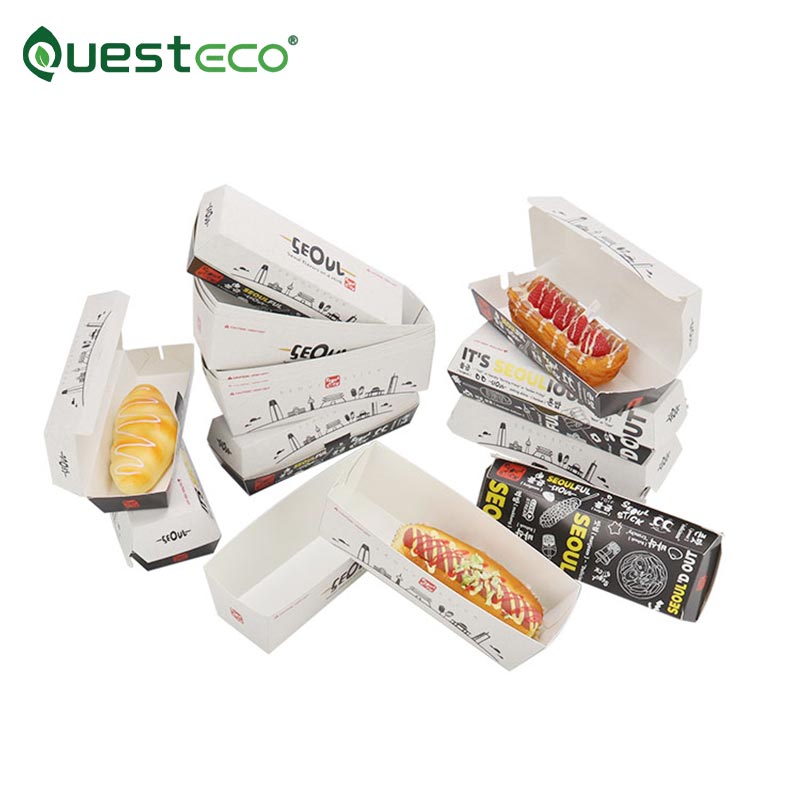

Choosing suitable packaging for hot dogs involves much more than finding a container that fits the food. A well-designed Hot Dog Box needs to balance structural strength, food safety, grease resistance, ventilation, heat retention, visual appeal, storage efficiency, and ease of use. It should protect the hot dog during preparation and delivery without making the customer experience inconvenient.
This guide explains the key functions of hot dog packaging, the materials commonly used, important design considerations, customization opportunities, and practical ways to select packaging for restaurants, food trucks, takeaway counters, catering businesses, and large-scale foodservice operations.
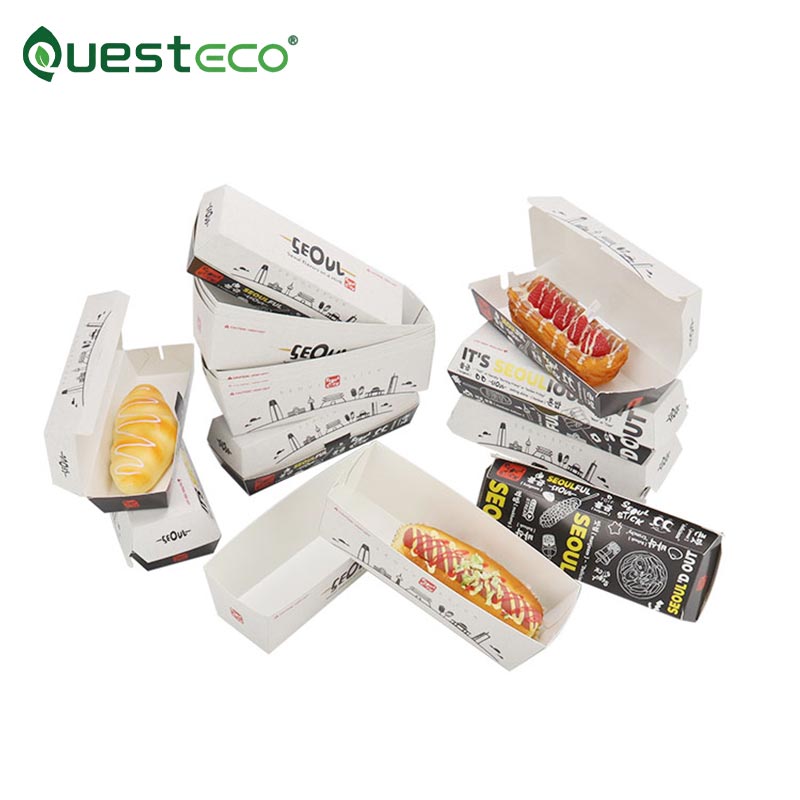
Hot dogs are frequently served in fast-paced environments where customers expect food to remain appealing from the kitchen or serving counter to the final bite. Packaging therefore becomes part of the overall foodservice experience.
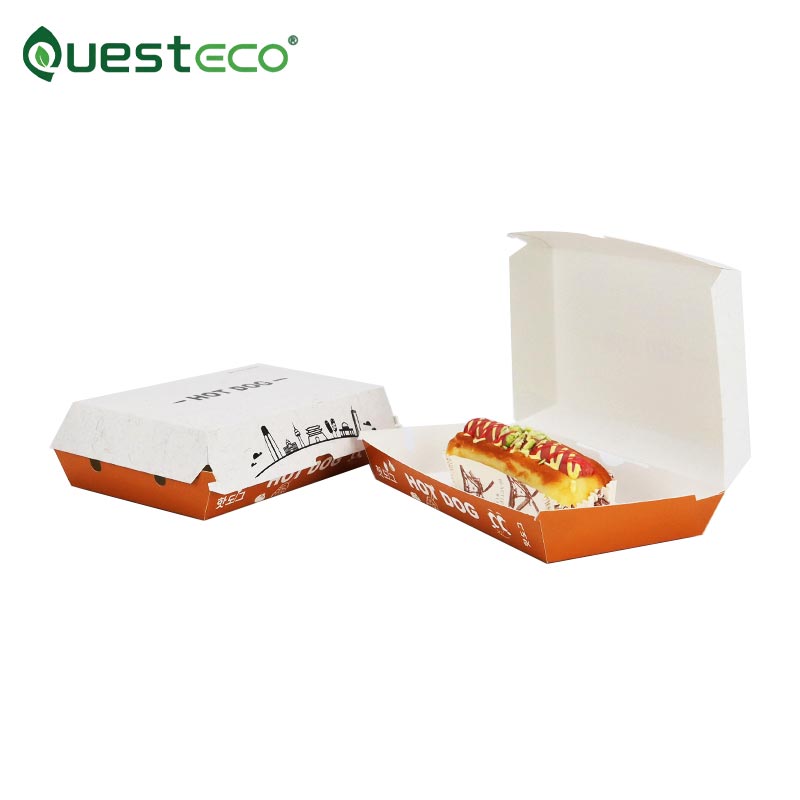
A suitable Hot Dog Box can keep the product organized, reduce direct contact with external surfaces, minimize mess from sauces and toppings, and make takeaway easier. For operators, good packaging can also improve workflow by allowing employees to assemble, close, stack, and distribute meals efficiently.
Helps shield the food from dust, handling, and accidental contact during transportation.
Keeps the hot dog visually organized and provides space for attractive branding.
Makes takeaway and delivery easier for both staff and customers.
Packaging also communicates quality. A box that opens neatly, holds the food securely, and looks professional can create a stronger impression than loose wrapping or poorly fitted containers.
Food protection is one of the primary reasons businesses invest in purpose-designed packaging. A hot dog may contain a sausage, bun, sauces, cheese, vegetables, fried onions, or other toppings. Without adequate support, these ingredients can shift during handling.
A properly constructed box helps maintain the position of the product and provides a physical barrier between the food and the surrounding environment. The structure should also be strong enough to resist normal pressure during stacking and transportation.
Sauces, oils, melted cheese, and other ingredients can quickly affect weak packaging. Excessive moisture can soften paper-based materials, while grease can create stains and weaken the appearance of the package. Depending on the food and expected holding time, the packaging specification may require an appropriate grease-resistant treatment or food-contact-safe coating.
Hot food produces steam. If steam becomes trapped inside a closed container, condensation may form and affect the texture of the bun. Packaging design should therefore consider airflow and the expected time between packing and consumption.
The box should maintain its shape during filling, carrying, stacking, and delivery. Locking tabs, folding structures, reinforced edges, and appropriate paperboard thickness can all contribute to better performance.
Material selection should reflect the food itself, service conditions, expected holding time, printing requirements, storage environment, and purchasing volume. No single material is ideal for every application.
| Material | Main Advantages | Typical Considerations |
|---|---|---|
| Kraft Paperboard | Natural appearance, printable, lightweight, practical for takeaway | May require suitable grease or moisture resistance |
| White Paperboard | Clean appearance, strong printing performance, suitable for branded designs | Material specification should match the intended food application |
| Corrugated Board | Higher rigidity and protection during transportation | Can be more substantial than needed for individual counter service |
| Specialty Food Packaging Board | Can be engineered for specific foodservice requirements | Specification and cost depend on structure and treatment |
When purchasing packaging, businesses should confirm that the selected material and any coatings or inks are appropriate for the intended food-contact application and comply with the regulations applicable to their market.
The most effective packaging combines practical engineering with a customer-friendly design. Several details deserve attention before placing an order.
Small structural details can have a surprisingly large effect on daily operations. If a box takes too long to assemble or frequently collapses during filling, the problem becomes an operational cost rather than simply a packaging inconvenience.
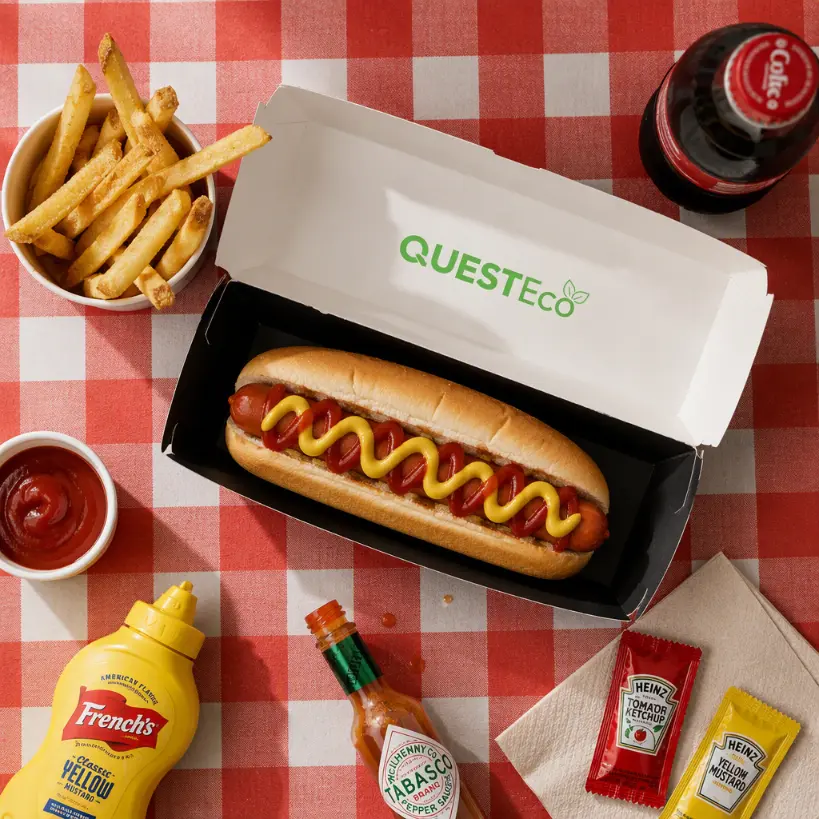
For restaurants, food trucks, catering companies, and food brands, packaging can become a mobile branding surface. A customized Hot Dog Box can display a company logo, product name, slogan, website, social media information, promotional message, or preparation instructions.
Customization can also go beyond graphics. Businesses may request specific dimensions, box structures, opening mechanisms, materials, finishes, or printing requirements according to their operating model.
Working with an experienced packaging manufacturer can make this process easier because the supplier can review dimensions, folding structures, printing requirements, and production considerations before mass manufacturing begins.
Wenzhou City Qingchen Packaging Co., Ltd. can support businesses looking for packaging solutions tailored to specific product and branding requirements, helping customers move from a basic packaging concept toward a practical finished package.
The best packaging specification depends heavily on how the hot dog is prepared and served. A high-volume stadium concession stand has different priorities from a premium restaurant or a small food truck.
Fast assembly, attractive presentation, and convenient carrying are often priorities. A compact folding box can help employees package orders efficiently while maintaining a professional appearance.
Food trucks typically operate within limited spaces. Packaging that stores flat and assembles quickly can help maximize available working space. Durable construction is also valuable because customers may carry their meals while walking.
Delivery introduces additional movement and handling. The packaging should provide adequate structural support and help prevent toppings and sauces from shifting. Ventilation and moisture management may become especially important when food spends more time inside the package.
Catering businesses may need large quantities of standardized packaging. Consistent dimensions, efficient storage, fast assembly, and attractive branding can all contribute to smoother event operations.
| Requirement | What to Consider | Why It Matters |
|---|---|---|
| Food Size | Length, width, height, toppings | Prevents excessive movement or compression |
| Food Condition | Heat, steam, grease, sauces | Influences material and ventilation requirements |
| Transportation | Counter service, takeaway, delivery | Determines required structural strength |
| Branding | Logo, artwork, colors, messages | Improves package recognition and presentation |
| Storage | Flat-packed or assembled format | Affects warehouse and workspace efficiency |
| Order Volume | Small batch or large production | Influences purchasing economics and production planning |
Even attractive packaging can perform poorly if practical requirements are overlooked. Several problems appear repeatedly in food packaging projects.
A practical prototype test should include filling the package with the actual product, closing it, carrying it, stacking it where relevant, and checking its condition after the expected holding period. This simple process can identify problems before they become expensive production issues.
Before ordering a new hot dog packaging solution, buyers can use the following checklist:
☐ Measure the complete product, including toppings.
☐ Confirm the desired internal box dimensions.
☐ Evaluate grease, oil, and moisture exposure.
☐ Consider steam and condensation.
☐ Decide whether flat-packed or assembled boxes are more practical.
☐ Determine the required printing area and artwork.
☐ Test the package with the actual food.
☐ Confirm applicable food-contact and packaging requirements.
☐ Estimate monthly or seasonal consumption.
☐ Discuss samples and production specifications with the supplier.
This approach helps buyers avoid selecting packaging based solely on price or appearance. Instead, the decision is based on the complete operating environment and the customer's actual experience.
A Hot Dog Box is designed to package and protect hot dogs during serving, takeaway, catering, and delivery. Depending on the structure, it can help maintain food positioning, reduce mess, and improve presentation.
Paperboard and kraft-based materials are common choices because they are lightweight, printable, and practical for foodservice packaging. The appropriate specification depends on the food, moisture, grease, temperature, and intended use.
Yes. Depending on the manufacturer and production requirements, businesses can customize dimensions, structure, artwork, printing, material specifications, and finishing details.
Measure the complete assembled hot dog, including the bun and toppings. The box should provide enough space to avoid compression while limiting unnecessary movement during handling and delivery.
Yes. Testing samples with the actual food is a practical way to evaluate fit, closure, structural strength, grease resistance, ventilation, presentation, and ease of assembly before committing to larger production quantities.
Customized printing can turn food packaging into a visible brand touchpoint. Logos, product information, promotional messages, and other brand elements can help create a more consistent customer experience.
The right hot dog packaging should do more than hold a product. It should protect the food, simplify daily operations, support convenient takeaway and delivery, and present your brand professionally. Whether you need standard packaging or a customized solution, careful consideration of dimensions, materials, structure, printing, and usage conditions can make a meaningful difference.
Looking for a practical and customized Hot Dog Box solution? Contact us at Wenzhou City Qingchen Packaging Co., Ltd. to discuss your product dimensions, packaging requirements, branding ideas, and production needs.